
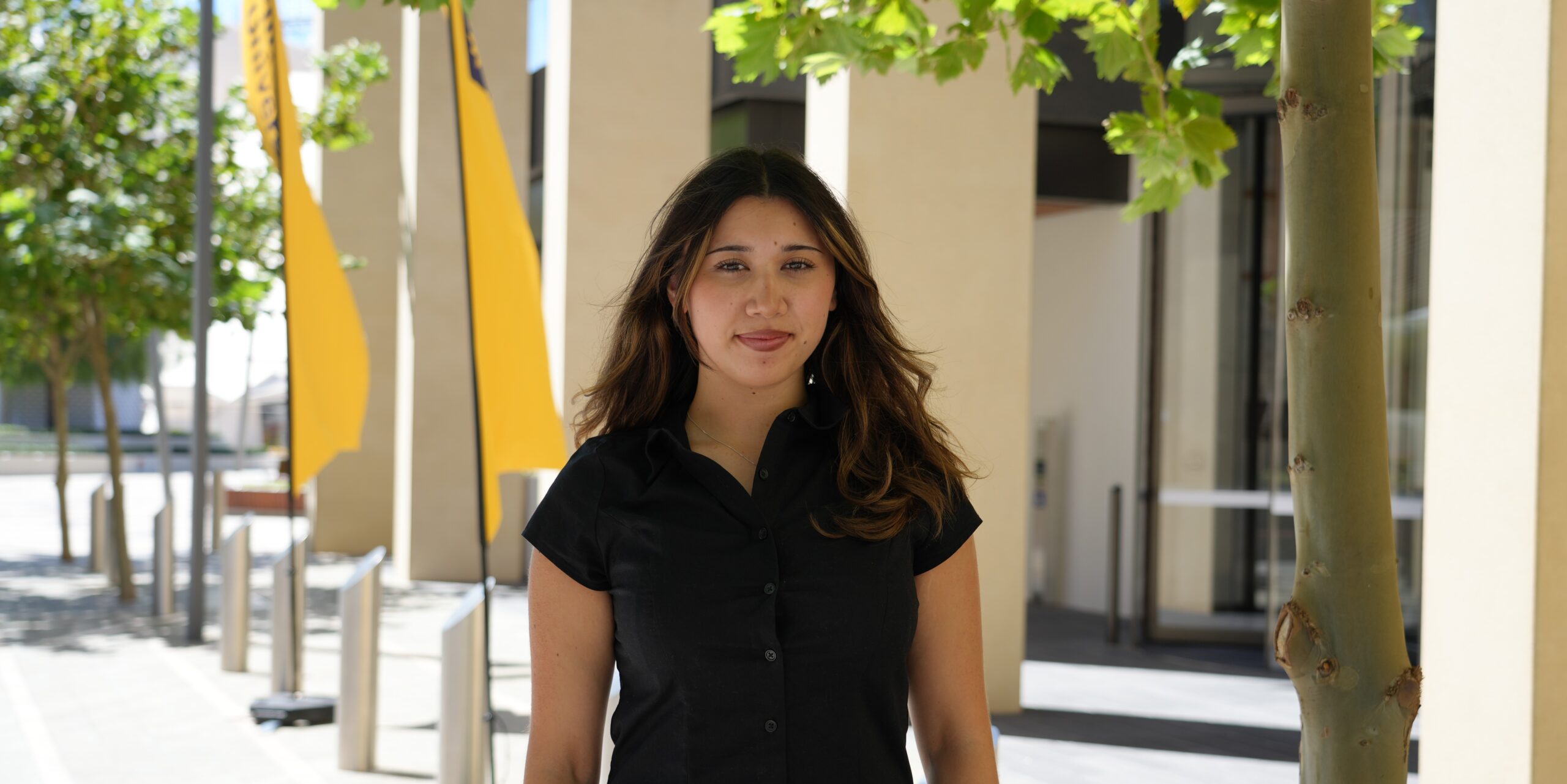
Engineering career paths aren’t what they used to be – and Lili’s generation isn’t looking back.
The 18-year-old budding mechanical engineer is living proof that it’s now easier than ever – and more financially rewarding – to combine university study with paid experience in the field.
On 23 February 2026, Lili will start the second year of her mechanical engineering (honours) degree, now as part of a degree-based apprenticeship (DBA), run by Flinders University in partnership with ASC, Australia’s submarine company.
She’ll spend three days a week at uni’ and the other two working at ASC as an engineering apprentice, rotating through ASC’s various submarine engineering functions. Rather than rack up a HECS debt, she’ll have all university fees paid by ASC and will take home an apprentice salary throughout the DBA. Plus, the volume of on-the-job experience she’ll accumulate will mean she emerges as a polished professional, eliminating the need to complete a graduate program.
“I’m looking forward to gaining practical experience while I’m learning,” enthuses Lili. “It [experience] is hard to get while studying, which is why the Degree Apprenticeship pathway works so well.”
Lili’s road to this point was also non-traditional.
Attracted by Findon Technical College’s established industry pathways, she enrolled in the College’s Advanced Manufacturing and Engineering stream in 2024 to begin Year 11.
But with some careful time-management she was also able to complete her Year 12 studies in the same year. She then remained at Findon in 2025 and used that 12 months to undertake Flinders mechanical engineering first-year subjects.
At the end of 2025 she applied for, and gained, formal entry into the DBA program, receiving credit for the first-year work she’d already completed.
“Dad had told me about Findon and its [industry] pathways,” explains Lili. “I looked into it and was really interested in the engineering. I always enjoyed maths, and the more practical side of learning.
“I enjoyed it so much – not just the practical elements but also the academic side of things.”
On 23 February, Lili will be one of 18 people commencing an engineering DBA at ASC: 16 facilitated by Flinders University, and two by Adelaide University. All but Lili will be first-year apprentices.
The group builds on ASC’s combined 2024 and 2025 cohort of 12 engineering apprentices, making a total of 30 now on their way at the company: 21 are studying mechanical engineering (with Flinders University); four electrical engineering (also with Flinders); and five software engineering (with Adelaide University).
It’s an upward trend that ASC Chief People and Workforce Development Officer Jo Horne says is sure to continue in 2027 and beyond.
“ASC is proud to support a strong, homegrown pipeline of submarine engineers at a time of significant national demand,” she explains.
“Lili’s journey reflects the success of the growing pathway from school-based technical education directly into the defence industry. She’s part of a new generation of engineers contributing to Australia’s submarine capability from the very start of their studies.”
While there’s no obligation for DBA participants to pursue permanent roles with ASC after they’ve graduated, it’s something Lili is seriously considering.
“I feel like ASC provides lots of opportunities to travel,” she says, “and travel is something I’d like to do.
“I know there are submarine bases in Hawaii and the UK – and that’s really exciting.”
You can learn more about DBAs at ASC here.