
A message from ASC's Chief operating officer for ssn-aukus
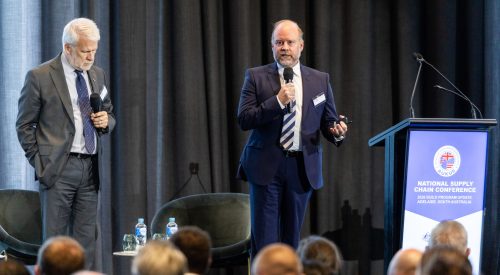
In a recent article published in Manufacturers Monthly, Christian Hamilton, ASC Chief Operating Officer for SSN-AUKUS, shares insight into Australia’s advances along the AUKUS pathway:
For nearly four decades, ASC has been at the epicentre of Australian submarine manufacturing and sustainment, one of the nation’s most complex industrial capabilities. From reclaimed swampland at Osborne in South Australia to a multi-site operation supporting the Collins Class fleet, the company has evolved alongside the country’s defence ambitions.
Today, as Australia embarks on the AUKUS nuclear-powered submarine pathway, ASC again finds itself busy, this time balancing the sustainment of the existing fleet with the scale-up of a nuclear-qualified workforce. At the operational helm of that transition is Christian Hamilton, chief operating officer of SSN AUKUS at ASC, whose career bridges both uniformed service and industry leadership.
Hamilton served in the Australian Army for more than 15 years, undertaking roles that included deployments to East Timor, Iraq and Afghanistan. His background spans surface-to-air missile systems and radar technology, and extended schooling in the United Kingdom in advanced technologies. This experience that would later prove highly relevant.
By April this year, he will have clocked close to 30 years across Australian defence and the defence industry. These experiences shape how he views ASC’s mission today.
“The advanced technology schooling in the UK was a relatively neat segue into an organisation like ASC,” said Hamilton. “I think ASC is unique amongst a lot of heavy engineering organisations because it is so closely aligned to our customer and our end user in the Royal Australian Navy.”
He describes the relationship with the Royal Australian Navy not as a traditional supplier arrangement, but as a bona fide partnership grounded in shared outcomes rather than transactional exchange. While commercial disciplines remain fundamental, the purpose is unambiguous: deliver a capable submarine force to the nation.
“At its core, we want to make sure we give capable submarine capability to the Royal Australian Navy,” he said.
Building confidence: The Collins legacy
ASC, which positions itself as Australia’s submarine company, considers itself the nation’s sovereign submarine company for good reason. The organisation originally constructed the six Collins Class submarines – a national undertaking that required building not only a fleet, but an industrial base from scratch.
For Hamilton, that history is more than nostalgia; it is a reminder of national capacity. In the context of the nuclear transition, he argued that Australia should draw confidence from what has already been achieved domestically. The Collins program stands as tangible proof that complex, high-consequence defence manufacturing can be executed locally.
“When we’re looking at the nuclear journey, it’s important to give ourselves some national confidence that we can do this,” he said. “We started from old swampland, built the facility that the Collins class submarine was constructed in, grew the workforce, and delivered six submarines to the Royal Australian Navy all inside a period of 16 years.”
Hamilton said that track record demonstrates that when Australia has a clear target, it can mobilise the skills, supply chains and industrial coordination required to deliver at scale.
“When we have a clear target to aim at, we certainly have the know-how here in Australia and we have an ability, as proven by Collins, to be able to deliver on these programs,” Hamilton said. “That gives us tremendous confidence.”
Sustainment at scale: Osborne and Henderson
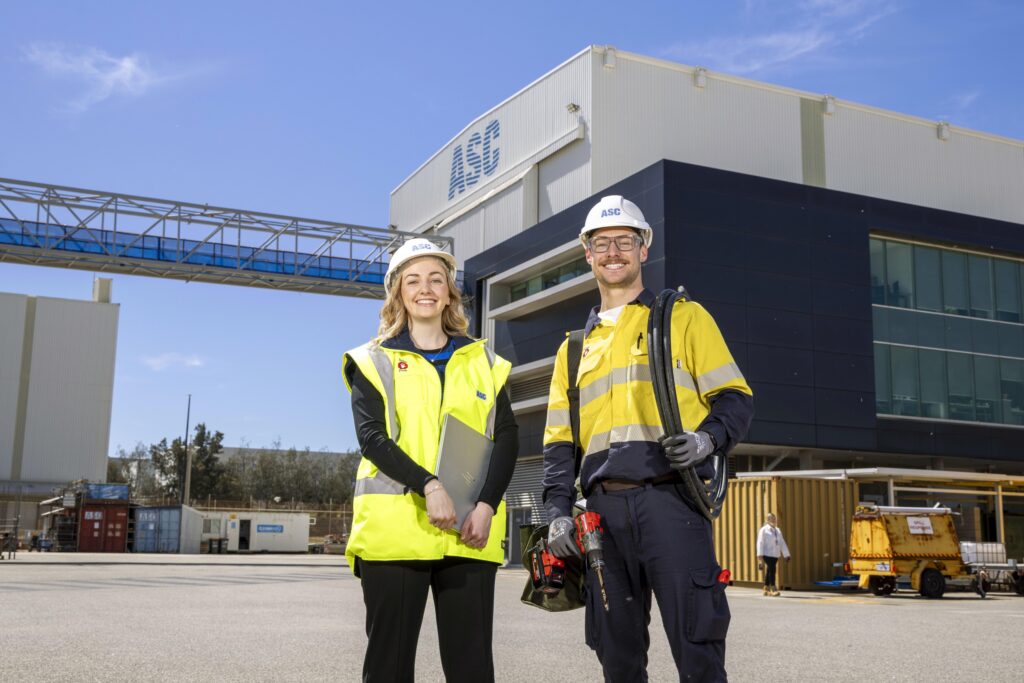
Today, ASC’s operational footprint spans both South Australia and Western Australia, supported by a national workforce. At Osborne, the company undertakes deep-level maintenance of the Collins Class fleet – complex, multi-year activities that effectively deconstruct and reconstruct a submarine to return it to service. On any given day, around 1,500 people may be working at the site, including suppliers.
In Western Australia, ASC operates from Henderson, south of Fremantle, undertaking mid-cycle, intermediate and recertification dockings. These are shorter in duration than deep-level maintenance and are focused on ensuring that submarines remain certified and that defects identified during operational cycles are rectified. Work is also undertaken at HMAS Stirling, reflecting the close integration between industry and Navy.
A distributed and international workforce
Beyond its physical sites, ASC is embracing a distributed model of work. Increasingly, the company is taking work to where expertise resides, rather than relocating individuals. Personnel are based in locations such as Queensland and Victoria, reflecting a broader industry trend towards national talent networks.
“It’s all about getting the right, talented people doing the right work at the right time,” Hamilton said. “Sometimes it’s easier to move the work to personnel than to move personnel to the work.”
That national approach extends offshore. As Australia prepares for nuclear-powered submarines under the AUKUS optimal pathway, ASC has established subsidiary organisations in the UK and the U.S to support workforce deployment and administration. The aim is clear: build sovereign capability by embedding Australians within mature nuclear enterprises.
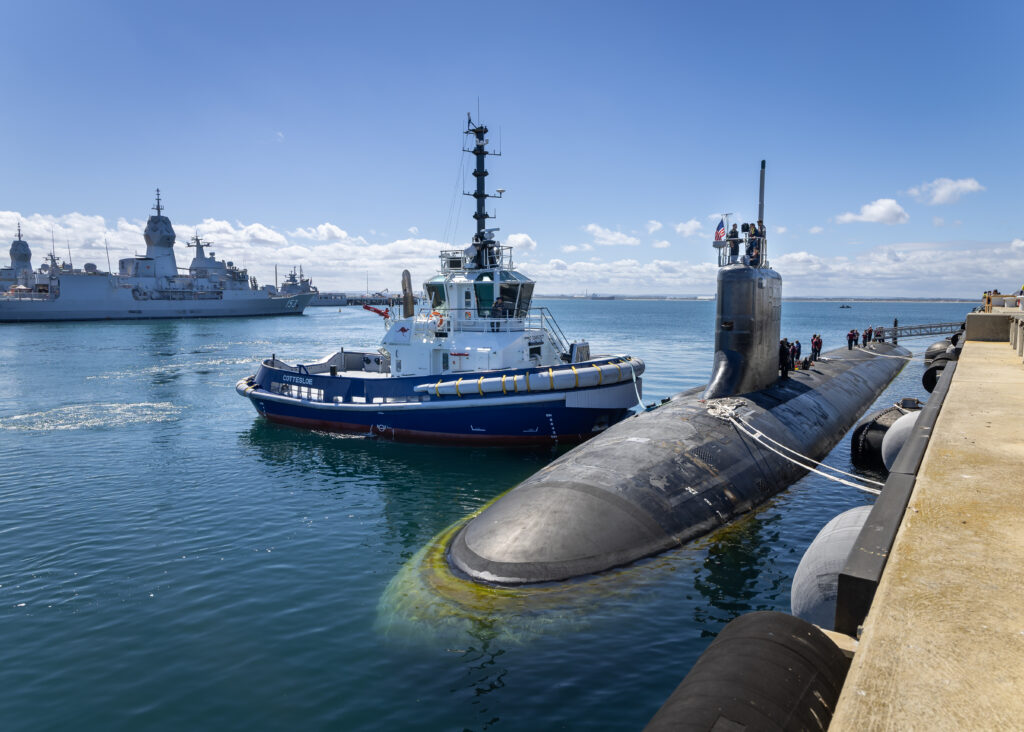
In Pearl Harbor, Hawaii, more than 200 ASC employees – drawn largely from the Collins sustainment workforce but increasingly including direct recruits – are undertaking tailored development programs. These personnel are learning the technical skills required to support US Navy Virginia Class submarines when Submarine Rotational Force – West (SRF-West) commences at HMAS Stirling from next year.
“They’re not only going to the various technical schools and getting the technical skills and qualifications,” Hamilton said, “but they are also getting practical on-the-job experience whilst they’re in Pearl Harbor as well.”
SRF-West and the nuclear safety case
SRF-West will involve a rotational presence at HMAS Stirling of one UK and up to four US nuclear-powered submarines. The platforms will rotate through Western Australia and will not be permanently based in Australia, consistent with the longstanding bipartisan policy of no foreign bases on Australian soil. The US elements will operate under the US-Australian Force Posture Agreement, with separate arrangements enabling UK participation.
For Australia, SRF-West is a stepping stone towards safely and securely owning, operating, sustaining and regulating its own nuclear-powered submarine fleet from the early 2030s. Royal Australian Navy officers and sailors are currently training and serving in UK and US boats to gain at-sea experience in nuclear powered submarines, while Australian maintenance personnel – including ASC staff – will support the submarines ashore.
Hamilton emphasised that nuclear is fundamentally about assurance. Every individual deployed overseas is on a discrete, assessed training pathway aligned to their trade or professional stream, whether engineer, technician or radiological specialist.
“In a nuclear world, making sure that you can assure and certify the capability of the people working on nuclear submarines is at the absolute heart of the nuclear safety case,” he said. “In order to be able to meet our regulatory obligations, it’s imperative that our people go through structured training that we can certify.”
That expectation extends into the supply chain. Companies seeking to become qualified and participate in the nuclear enterprise must be able to quantify and certify workforce competence.
“It’s a non-negotiable that they are able to certify and quantify the capability they’ve got,” Hamilton stated.
Government partnership and the talent pipeline
By 2030, the goal is to have around 500 ASC personnel qualified and ready to support SRF-West activities in Australia. Some have already returned to support recent maintenance periods, demonstrating the practical value of the overseas placements. At February 2026, ASC’s total workforce had reached more than 3,000 people, reflecting both sustainment demands and nuclear preparation.
Collaboration with government underpins this expansion. As a government business enterprise, ASC works closely with the Department of Defence, the Department of Finance and the Australian Submarine Agency. Relationships with the South Australian and Western Australian governments are equally central, particularly given infrastructure and workforce implications.
In Western Australia, engagement is tied to the Henderson redevelopment and ASC’s role as a key stakeholder. In South Australia, collaboration extends to the design and construction of the future nuclear-powered submarine construction yard, with land originally owned by the South Australian government provided to the Commonwealth to enable development.
“We find at all levels of the SA and WA governments nothing but support and a real desire to lean in,” Hamilton says. “Anytime I’m near someone from the two state governments, they’re always asking what they can do – what more can they do.”
Workforce development is a shared priority. ASC has partnered with the South Australian government on the Tonsley Technical College initiative, co-developing curriculum from Year 10 upwards to create direct pathways into apprenticeships and engineering streams aligned to nuclear requirements.
“It’s probably a sign of the times where industry is looking to go further up that talent pipeline,” Hamilton reflected. “If young people want to work in our naval shipbuilding or sustainment sector, they can now start that journey very quickly.”
A legacy beyond submarines
Interest in ASC’s apprenticeship and graduate programs is strong, with more than 1,000 apprenticeship applicants and several hundred graduate applicants each year. Structured pipelines such as Tonsley offer an accelerated route into these competitive streams, addressing wider manufacturing workforce pressures while preparing for nuclear demand.
Yet for Hamilton, the nuclear transition is not solely about platforms or programs. It is about national resilience and long-term industrial maturity. Australia’s decision to invest in nuclear-powered submarines reflects a strategic judgement about security, but it also catalyses a generational uplift in capability.
“Ultimately, Australia’s undertaking the investment into nuclear-powered submarines because it believes that it’s in its national interest to have that capability as part of its national security,” he said. “That gives you a real foundation around why a program like that is so important to us.”
The multiplier effect, he suggested, will extend beyond the boats themselves, embedding advanced manufacturing, regulatory depth and safety culture into the broader economy.
“It will leave a legacy that goes far deeper than just the delivery of of nuclear-powered submarines for the Royal Australian Navy,” Hamilton said. “It means Australia would have stepped into an industrial-level nuclear capability where we’ve proven ourselves to be able to not only manufacture nuclear submarines in this country but safely maintain them and keep them operational.”
For young Australians contemplating careers in manufacturing or engineering, the message is clear.
“If you’re a young person at the moment entering into the workforce,” Hamilton added, “I’d hope that that grabs your imagination.”
From reclaimed swampland at Osborne to a nuclear-ready enterprise spanning continents, ASC’s journey reflects both continuity and transformation. As SRF-West approaches and the AUKUS pathway advances, the company stands at the intersection of Government policy, Defence industry, Navy capability and national purpose.