
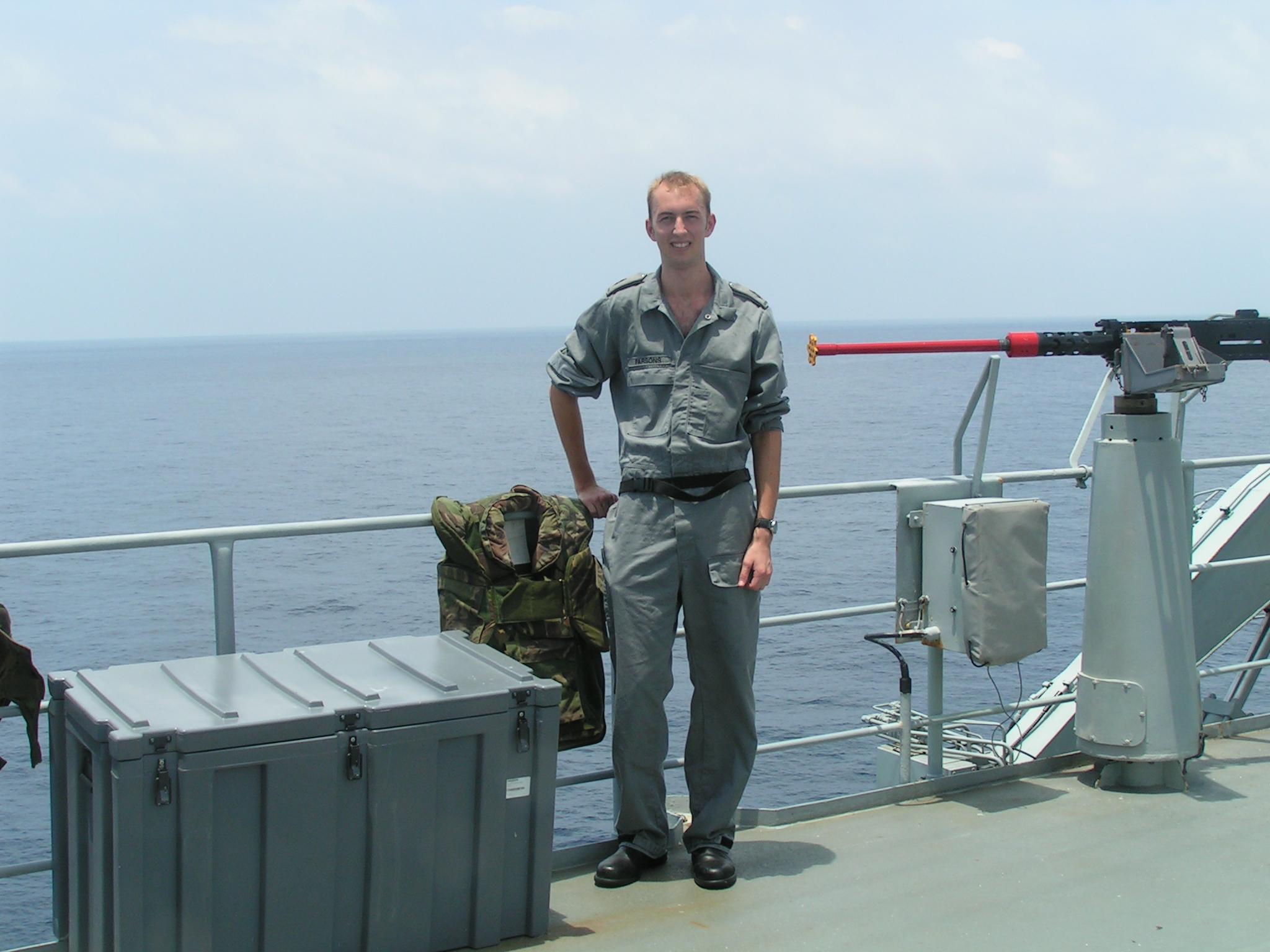
For many, Garden Island is just a name on a map – an isolated island 5km off the Western Australian coast, home to one of the country’s most secure naval bases.
Linked to the mainland by a winding, man-made causeway, it’s mostly ‘out of sight, out of mind’ for the general public. But for Ben, it’s the beating heart of Australia’s submarine training capability.
As Head of the Submarine Training School at the Royal Australian Navy’s Submarine Training and Systems Centre (STSC), Ben leads the team that has been shaping Collins Class submariners for over 30 years, and is now preparing for the life extension of the Collins Class and the transition to the nuclear era.
Ben has deep personal ties to the Royal Australian Navy (RAN). After spending nine years in the Navy, which included sailing the world on a variety of Australian and international platforms, Ben chose to pursue a civilian career focused on training and safety. “I loved the exposure to different industries like Oil & Gas, Infrastructure and Security, but I wanted something more meaningful than generating shareholder value. Defence was calling me back,” he says.
In 2022, Ben found a job that merged his Navy background and his expertise in training. He joined ASC as Head of the Submarine Training School, a role that places him at the centre of Australia’s submarine capabilities.
ASC is widely known for its expertise in submarine construction and sustainment work, but less recognised is its crucial role in training submariners for over three decades, working hand-in-hand with the Navy.
The STSC is far from a conventional training facility. “We’re essentially a deconstructed submarine,” Ben explains. “The centre is equipped with ship-fit propulsion systems, switchboards, and even a full-motion control room simulator. It’s as close to the real thing as you can get without actually going to sea.”
Every Collins Class submariner, past, present, and future, begins their journey at the STSC. “This includes everyone from the Chief of Navy (Vice Admiral Hammond, a graduate of the program) down to the newest recruit. The school trains all initial Collins Class submariners, as well as offering career courses and work-up training for existing crews,” says Ben.
“The Submarine Training School takes in individuals who are already skilled in their respective vocations – engineers, chefs, mechanics, and more, and turns them into qualified Collins Class submariners. At the end of this rigorous journey, they earn the highly coveted ‘Dolphins’ badge, a symbol of their proficiency and readiness to operate at sea.”
The school is also home to ‘Boat 7,’ Navy’s virtual Collins Class submarine simulator – a digital training environment that has garnered world-wide recognition for its innovative approach.
Ben leads a team of dedicated instructors, 20 of whom are former submariners. “Our instructors have trained every submariner in their field,” explains Ben. “They know everyone in the submarine fraternity. That impact of that knowledge and experience is enormous.”
For Ben, this work is deeply meaningful. “It’s about launching careers, growing a capability, and keeping people safe. It’s about service, helping the Navy protect the country for generations to come,” says Ben.
Looking to the future, Ben feels a personal connection to the work he leads. “Every time I drive across the causeway to Garden Island, I reflect on how far I’ve come, from a kid growing up on Bribie Island to leading ASC’s submariner training services here in Western Australia.”